
What to Eat in Salina: Local Food, Wine and Authentic Island Experiences
 Posted by:
 - 236992
- 6

- Authentic Food Experiences in Salina: From Vineyards to Local Kitchens
- Where to Eat in Salina: Local Restaurants and the Island’s Approach to Food
- Food in Salina: A Reflection of Landscape, Climate and Island Life
- Frequently Asked Questions
At first glance, Salina might seem like a typical Mediterranean island where food revolves around a few iconic elements. Granita, capers, and tomatoes are often mentioned as the essentials, but this perception only scratches the surface.
What makes Salina different is the way food is still deeply embedded in its environment. The island’s volcanic origin, combined with its elevation and exposure to sea winds, creates a series of microclimates that influence how and what is grown. This is why ingredients here often have a more concentrated taste, shaped by scarcity of water, mineral-rich soil, and traditional farming techniques that have not been replaced by intensive agriculture.
For travelers, this leads to a natural question: is Salina really a food destination, or just a place with a few local specialties? The answer becomes clear once you start moving beyond the obvious. Food here is not designed for tourism but remains part of everyday life, and it is precisely this authenticity that defines the experience.
Salina’s Food Identity: Wine, Capers and Traditional Production
Among the most recognizable products of Salina is Malvasia delle Lipari, a wine that has been cultivated on the island for centuries. Unlike mass-produced wines, Malvasia here is still closely tied to small-scale production. Vineyards stretch across terraces carved into the hills, particularly around Malfa and Leni, where exposure to sun and sea breeze creates ideal conditions for slow grape maturation.
Visiting a winery in Salina often feels more like entering a family space than a commercial business. Tastings are typically informal, sometimes taking place directly among the vines or in small cellars, where producers explain how techniques have been passed down rather than reinvented.
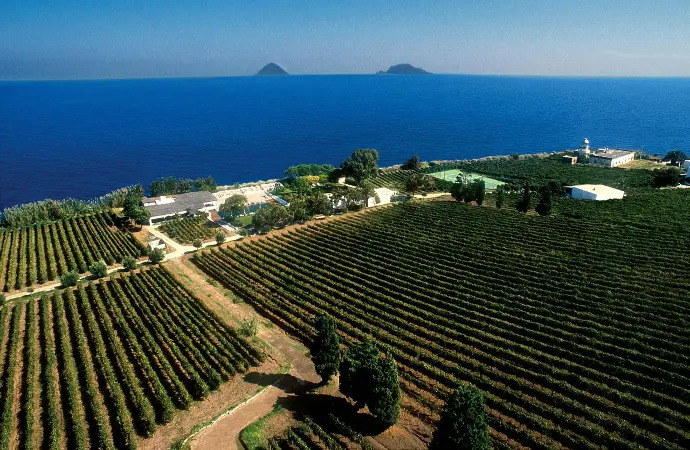
This raises an interesting point for visitors: is it worth doing a wine tasting in Salina? In most cases, yes, because it offers insight not only into the product but into the rhythm of the island itself.
Alongside wine, capers of Salina represent another pillar of local identity. Grown in dry volcanic soil with minimal irrigation, they develop a strong, almost floral intensity. While capers are exported worldwide, the ones consumed locally are often prepared in simpler ways, preserved in salt or used fresh in dishes that highlight their natural flavor.
This connection between land and production extends to many other ingredients. Vegetables, herbs, and preserved foods are still part of a seasonal cycle, and small producers continue to operate outside large distribution systems. For travelers, this means that some of the best products are not found in restaurants, but in local markets, family-run shops, or directly from those who produce them.
Authentic Food Experiences in Salina: From Vineyards to Local Kitchens
Understanding Salina through its food goes beyond restaurants and menus. The most meaningful experiences often happen away from formal settings, through direct contact with the people who cultivate, harvest, and prepare what ends up on the table.
Across the island, small-scale producers open their spaces to visitors in a way that feels informal and personal rather than structured. In vineyard areas around Malfa and Leni, wine tastings often take place directly among the vines or in family-run cellars, where Malvasia is explained through stories, not just techniques. These encounters reveal how production is still tied to seasonal rhythms and generational knowledge.
A similar approach can be found in agriculture. Walking through small plots where capers, vegetables, or seccagno tomatoes are grown offers a clearer understanding of how the island’s environment shapes its food. In some cases, visitors are invited to take part in simple activities, from selecting ingredients to observing traditional preservation methods.
These experiences often extend into the kitchen. Rather than formal cooking classes, what you find in Salina are shared moments in private homes, where recipes are prepared collectively and adapted to what is available. A tomato salad, for example, may begin in a garden and end at a table overlooking the sea, highlighting how closely food is linked to place.
This naturally leads to a question many travelers ask when planning their trip: are food experiences in Salina worth it? For those looking for something beyond standard tours, they often become one of the most memorable parts of the journey. Their value lies not in structure, but in their authenticity, offering a direct connection to the island’s culture and everyday life.
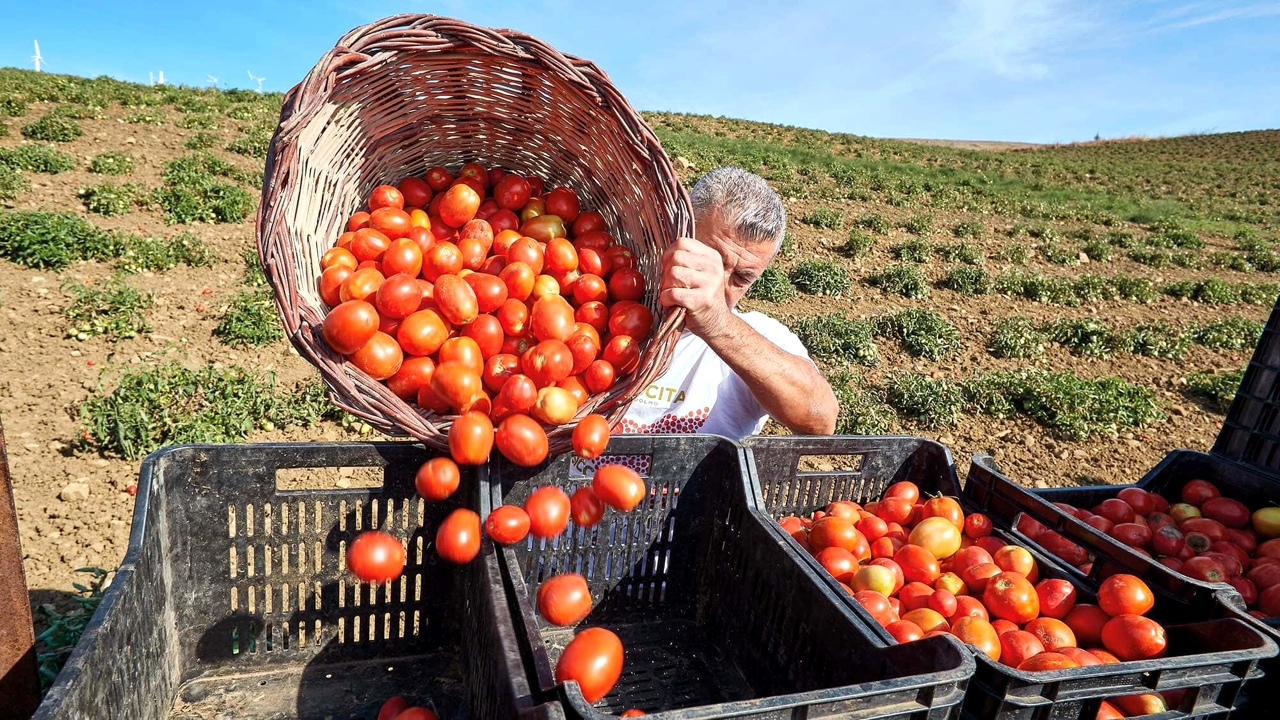
Seccagno Tomatoes of Salina: Traditional Farming and Intense Flavors
The pomodoro seccagno is one of the clearest examples of how agriculture in Salina adapts to the island’s environment rather than controlling it. Grown without artificial irrigation, these tomatoes rely on volcanic soil, altitude, and constant sea winds.
Cultivated at around 400 meters above sea level, they develop slowly, resulting in a fruit with low water content and a high concentration of sugars, minerals, and antioxidants.
Compared to standard tomatoes, the seccagno variety is denser, more aromatic, and significantly more intense in flavor.
After harvesting in summer, the tomatoes are traditionally tied into clusters known as pennuli and hung in ventilated spaces. This natural drying process preserves them while further concentrating their taste. Some are later stored in extra-virgin olive oil, extending their use throughout the year.
In local cuisine, seccagno tomatoes are rarely secondary ingredients. They often form the base of simple dishes, paired with capers, oregano, and olive oil, where their flavor remains central rather than hidden.
For many visitors, this raises a simple question: why do ingredients in Salina taste so different? The answer lies in the combination of natural conditions and traditional methods, where limited water, mineral-rich soil, and time all contribute to a more concentrated and authentic taste.
Where to Eat in Salina: Local Restaurants and the Island’s Approach to Food
Eating in Salina is less about selecting from a list of “top restaurants” and more about understanding how food is approached across the island. Unlike many destinations, menus are rarely fixed. Dishes often change based on what fishermen bring in or what is available from local producers, making each meal slightly different.
In Santa Marina Salina, the island’s main port, restaurants tend to be lively but still grounded in tradition, with fresh fish, simple pasta dishes, and local ingredients taking center stage. Moving toward Malfa, the atmosphere becomes more relaxed and closely tied to the surrounding vineyards, where wine and food naturally complement each other.
What stands out is not only the food itself, but the rhythm of dining. Meals are slower, less structured, and more connected to the moment. It is not unusual for dishes to arrive when ready rather than following a strict sequence, allowing the experience to feel more natural and less staged.
This often leads to a common question: where are the best restaurants in Salina? The answer is rarely about specific names. The most rewarding places are usually those that stay close to local sourcing, avoid unnecessary complexity, and let the quality of ingredients speak for itself.
In Salina, eating well is not about refinement in the traditional sense, but about authenticity. The combination of simple cooking, fresh products, and the island’s setting creates an experience that feels consistent with everything else around you.
Granita in Salina: Where Tradition, Ingredients and Daily Life Meet
Granita is often associated with Sicily as a whole, but in Salina it still follows a more traditional approach that has gradually disappeared in many other parts of the island. Here, it is not simply a dessert, but part of daily life, often enjoyed in the morning with a soft brioche, especially during the warmer months.
What makes granita in Salina different is not only its texture, but the way it is prepared and consumed. The consistency is lighter and more natural than gelato, with a fine, slightly granular structure that allows the main ingredient to remain clearly recognizable. It is not designed to be creamy or heavy, but to refresh while preserving the intensity of flavor.
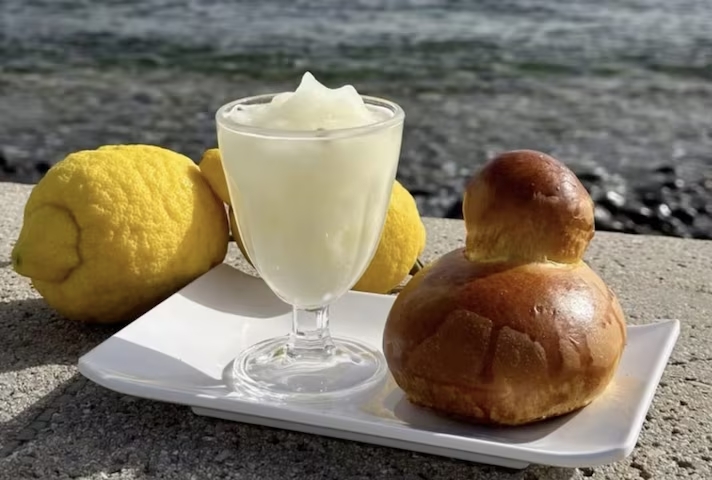
Its reputation comes not from innovation, but from continuity, maintaining a preparation method that stays close to tradition. Sitting here, just a few meters from the sea, the experience becomes as much about place as it is about taste.
The range of flavors reflects the island’s agricultural identity. Seasonal fruits such as mulberry, fig, and peach are common, alongside classics like almond, pistachio, and coffee. The availability of these flavors often depends on the time of year, reinforcing the connection between granita and local production.
This often leads visitors to ask what makes Sicilian granita, and particularly Salina’s, so different from other frozen desserts. The answer lies in its balance. It is lighter than gelato, less compact than sorbet, and designed to highlight the natural qualities of its ingredients rather than transform them.
In Salina, granita is not an exception or a treat reserved for specific moments. It is part of the island’s rhythm, a simple habit that reflects the same principles found in its broader food culture: seasonality, quality, and a close connection to the environment.
Food in Salina: A Reflection of Landscape, Climate and Island Life
In Salina, food is not something added to the experience, it is one of the clearest ways to understand the island itself. Every ingredient reflects a specific condition, from the mineral composition of volcanic soil to the constant exposure to wind and the scarcity of water. These factors are not limitations, but elements that shape how products grow, mature, and ultimately taste.
This is why Salina’s cuisine cannot be reduced to a list of typical dishes. It is the result of a system that has developed over time, where agriculture, preservation techniques, and daily habits are closely connected. Products like Malvasia wine, capers, or seccagno tomatoes are not isolated specialties, but expressions of the same environment, each influenced by the same natural constraints.
For visitors, this often changes the perspective on what it means to “eat well” in a place like Salina. The experience is not defined by complexity or presentation, but by the clarity of flavors and the context in which they are enjoyed. A simple dish becomes meaningful because of where it comes from, not because of how it is transformed.
This leads to a broader realization: food in Salina is a way to read the island. Through it, you begin to understand the relationship between land and sea, between tradition and adaptation, and between past and present. It becomes evident that what is served on the table is part of a much larger system that continues to evolve without losing its identity.
Salina is not just a destination where you eat well. It is a place where food becomes a lens through which the landscape, the culture, and the rhythm of everyday life can be understood more deeply.
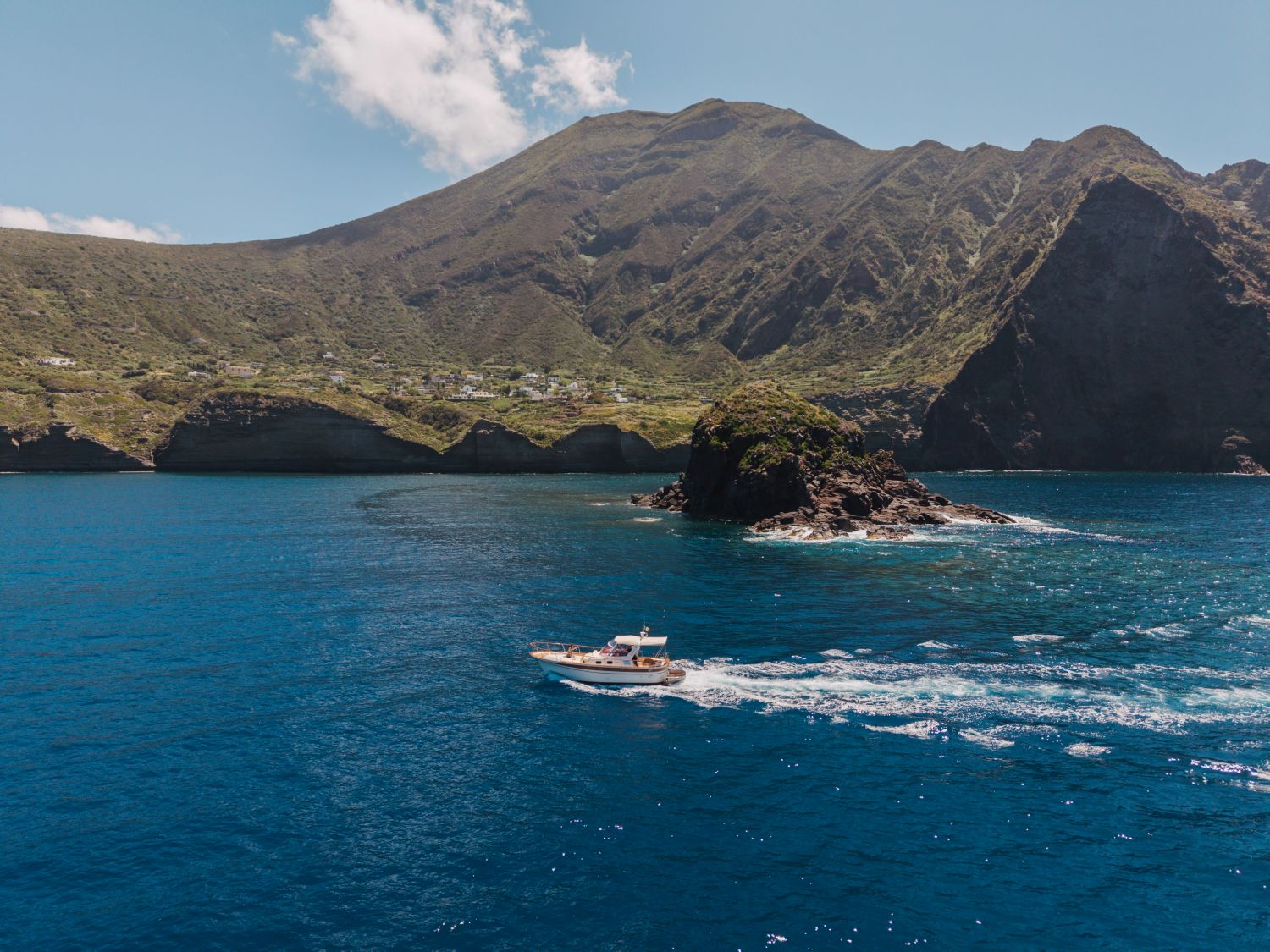
From Sailing to Dining: Experiencing Salina Step by Step
Arriving in Salina by boat changes the way you experience the island from the very beginning. After a morning sail between the Aeolian Islands, the coastline slowly reveals itself, with the green slopes of the island replacing the more volcanic landscapes nearby. Anchoring near Santa Marina or along the coast, the pace naturally shifts.
By late morning, stepping ashore means entering a different rhythm. A short walk inland can lead to small vineyards or local gardens, where producers still work on a scale that feels personal rather than commercial. In some cases, you may find yourself tasting Malvasia directly where it is produced, or observing how capers and vegetables are cultivated under conditions shaped by wind and volcanic soil.
Lunch is rarely rushed. It might begin with something simple, like a salad made with seccagno tomatoes, capers, olive oil, and bread, prepared with ingredients that were grown just a few meters away. The experience is not about presentation, but about freshness and context, eating something that belongs exactly to that place.
In the afternoon, the island offers different options. Some return to the sea, swimming in quiet coves or moving toward Pollara, where the landscape becomes more dramatic. Others stay on land a bit longer, stopping in Lingua for a granita, often considered part of the day rather than just a dessert.
As the sun begins to set, heading back on board or sitting by the water brings everything together. The food, the landscape, and the movement between sea and land become part of the same experience.
This is often what travelers remember most. Not a single restaurant or product, but the continuity between sailing, exploring, and eating, where each moment naturally leads to the next.
Frequently Asked Questions
Q: What is a Cabin Charter?
A: A cabin charter allows you to book a cabin on a shared boat, perfect for solo travelers or small groups. Learn more here.
Q: What types of cabin charters are available?
A: Options include gulets, catamarans, and sailing yachts, each offering unique experiences. Explore options here.
Q: Is sailing experience required to join a cabin charter?
A: No, a professional crew handles everything, so you can relax and enjoy the journey. Read more here.
Q: Are itineraries fixed or flexible on a cabin charter?
A: Itineraries are thoughtfully planned but can be adjusted based on weather and guest preferences. Find out more here.
Q: What to pack for a yacht charter?
A: Pack light with soft luggage, swimsuits, sunscreen, and comfortable shoes. See the full packing guide here.
Q: What to do in case of adverse weather conditions?
A: The skipper will adjust the itinerary to ensure safety and comfort. Learn more here.
Q: Are Cabin Charters Suitable for Families with Children?
A: Absolutely! Cabin charters are perfect for families, offering kid-friendly amenities, safe environments, and flexible itineraries for quality time together. Learn more here.


