
Sailing in Stromboli: Guide, Things to Do and Hidden Gems
 Posted by:
 - 9292
- 7

- Where to Stay and What to Expect on the Island
- Eating in Stromboli and Experiencing Daily Island Life
- What to Do in Stromboli: Key Experiences on the Island
- Stromboli at Its Core: Events, Atmosphere and What Defines the Island
- Frequently Asked Questions
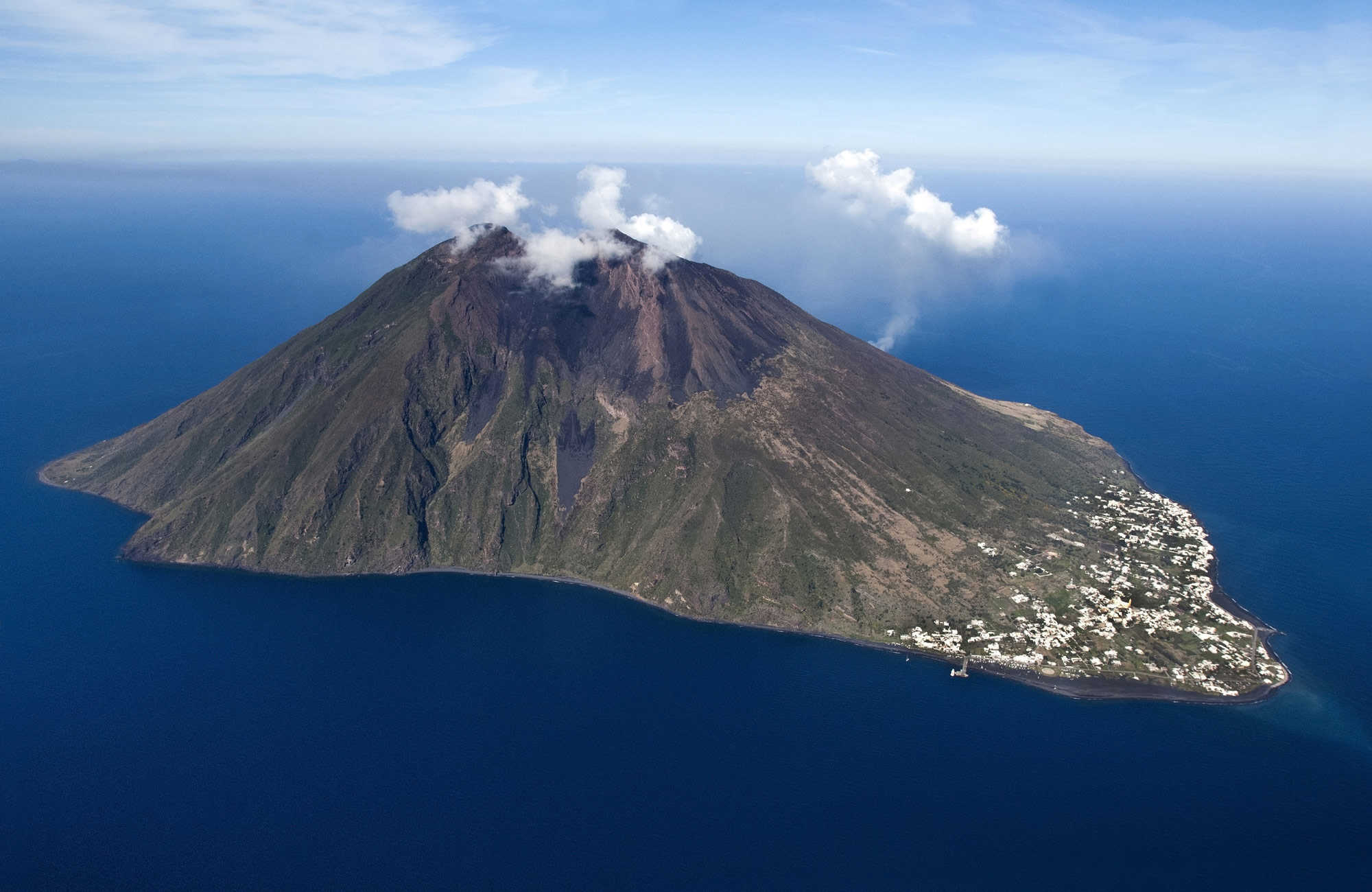
Seen from the sea, Stromboli does not look like a typical Mediterranean island. It rises abruptly from the Tyrrhenian, dark and steep, with a nearly perfect conical shape that immediately sets it apart from the softer profiles of nearby islands like Salina or Lipari. There is no gradual approach. The island appears suddenly, almost vertically, as if emerging directly from deep water. Part of the Aeolian Islands north of Sicily, Stromboli is defined by one of the most active volcanoes in the world. Its activity is not rare or occasional, but continuous, with eruptions occurring regularly throughout the day and night. These bursts, often visible even from a distance, create a rhythm that becomes part of the landscape itself. Over time, this constant activity has built and reshaped the island, creating steep slopes, dark volcanic terrain, and the distinctive scar of the Sciara del Fuoco, where material descends toward the sea.
Often referred to as the “Lighthouse of the Mediterranean”, Stromboli has historically served as a natural point of reference for sailors navigating these waters. Long before modern navigation systems, the glow of eruptions visible at night provided orientation across the Tyrrhenian Sea. Even today, approaching the island after sunset offers a similar experience, where light, movement, and sound combine into something that feels both natural and unfamiliar. What makes Stromboli different is not only the presence of the volcano, but the way the entire island still revolves around it. Unlike many Mediterranean destinations that have adapted their landscape to tourism, Stromboli has remained constrained by its own geography. The lack of a large protected marina, limited freshwater resources, and strict environmental conditions have prevented large-scale development.
As a result, the island retains a strong sense of balance between human presence and natural forces. Villages like San Vincenzo are composed of white houses built low against the terrain, connected by narrow paths rather than wide roads. Movement is slow, often on foot or by small electric vehicles, and daily life follows a rhythm influenced more by light, sea conditions, and volcanic activity than by external demand. This creates a type of experience that is increasingly rare. Stromboli does not offer variety in the traditional sense. It offers focus. Black sand beaches, deep blue water, steep volcanic slopes, and open horizons define the visual language of the island. Even small details, such as the contrast between white architecture and dark rock, reinforce this identity.
For travelers, Stromboli works on two levels. On land, it offers a minimal but immersive environment made of villages, walking routes, and natural observation points. At sea, it becomes something else entirely. The island reveals its full scale only when seen from the water, where its verticality, isolation, and constant activity are more evident. This dual perspective is what makes Stromboli one of the most powerful stops in any Aeolian sailing itinerary. Many islands are beautiful from the sea. Stromboli is different. It feels active, unstable, and alive, and that changes the way it is remembered.
What Makes Stromboli Different from Other Mediterranean Islands
The main reason to visit Stromboli is the volcano itself. Few places in Europe allow you to observe active eruptions so frequently and from such close proximity. This is not a dormant landscape, but an environment in constant movement, where light, sound, and terrain change continuously throughout the day.
However, the volcano alone does not fully explain the island’s appeal. Stromboli attracts travelers because it offers a different kind of Mediterranean experience, one that feels less constructed and more essential. There are no large resorts, no structured attractions, and very little designed for mass tourism.
Instead, the experience is built around simple, direct moments: walking through whitewashed lanes in San Vincenzo, watching the outline of the volcano at sunset, or observing the glow of eruptions after dark.
Another defining aspect is the island’s scale and simplicity. Movement is limited, distances are short, and the absence of large infrastructure creates a slower, more natural rhythm. Time is not organized around activities, but around light, sea conditions, and the presence of the volcano itself. This creates a sense of isolation and focus that is increasingly rare in the Mediterranean.
At the same time, Stromboli has a strong visual identity. The contrast between black volcanic terrain, white architecture, and deep blue water gives the island a clear and recognizable character. Every element feels connected, from the beaches to the villages to the slopes above.
So why visit Stromboli instead of another Aeolian island? Because it offers a more concentrated experience. Other islands may provide more variety, easier access, or greater comfort. Stromboli offers intensity. It is not a place where you do many different things, but a place where what you experience feels more direct and memorable.
Where to Stay and What to Expect on the Island
Accommodation in Stromboli follows the same logic as the island itself: simple, limited, and closely connected to the environment. There are no large resorts or international hotel chains. Most options consist of small guesthouses, family-run accommodations, and independent houses, often integrated into the natural landscape rather than built to dominate it. In San Vincenzo and the nearby Scari area, you will find the widest range of options. This is the most accessible part of the island, where ferries arrive and where most services are concentrated. Properties here typically follow the traditional Aeolian style, whitewashed walls, flat roofs, shaded terraces, and open spaces designed to deal with heat and light. Many accommodations offer views of the sea, while others face the volcano, which becomes particularly striking in the evening.
Comfort levels vary, but even the more refined options remain relatively understated compared to other Mediterranean destinations. The focus is less on luxury in the conventional sense and more on location, atmosphere, and connection with the surroundings. Ginostra, on the opposite side of the island, offers a very different experience. With only a small number of accommodations and no easy land connection to the main village, staying here requires more planning. Access is primarily by sea, and daily life is even more reduced to essentials. This makes Ginostra less practical, but significantly more atmospheric. It appeals to travelers looking for isolation, silence, and a deeper sense of detachment from busier environments.
Another aspect to consider is seasonality. During peak summer months, availability becomes limited quickly due to the small number of properties on the island. Booking in advance is often necessary, especially in San Vincenzo. Outside of peak season, options are more flexible, but some accommodations may close temporarily. This often leads to a practical question: where is it better to stay in Stromboli? For most travelers, San Vincenzo offers the best balance between accessibility, services, and overall experience. It allows easy movement, access to restaurants, and proximity to main departure points for excursions.
Ginostra, on the other hand, is better suited for those who prioritize atmosphere over convenience. It is less about where you stay, and more about how disconnected you want to be. In both cases, expectations should remain aligned with the nature of the island. Stromboli is not a destination built around accommodation. Where you stay is part of the experience, but it is the landscape, the volcano, and the rhythm of the island that define the journey.
Sailing Around Stromboli: What to Expect at Sea
Approaching Stromboli by sea completely changes the perception of the island. Its volcanic cone becomes visible from a distance, rising sharply from deep water with no gradual coastline. Unlike other Aeolian Islands, the impact is immediate and almost vertical.
Sailing here is not about long distances or multiple stops, but about timing and positioning. The key moment is navigating along the Sciara del Fuoco, the steep volcanic slope where lava and debris descend into the sea. This area is inaccessible by land and can only be fully experienced from the water.
The most striking conditions occur in the evening. As daylight fades, eruptions become more visible, creating flashes of light against the dark profile of the island.
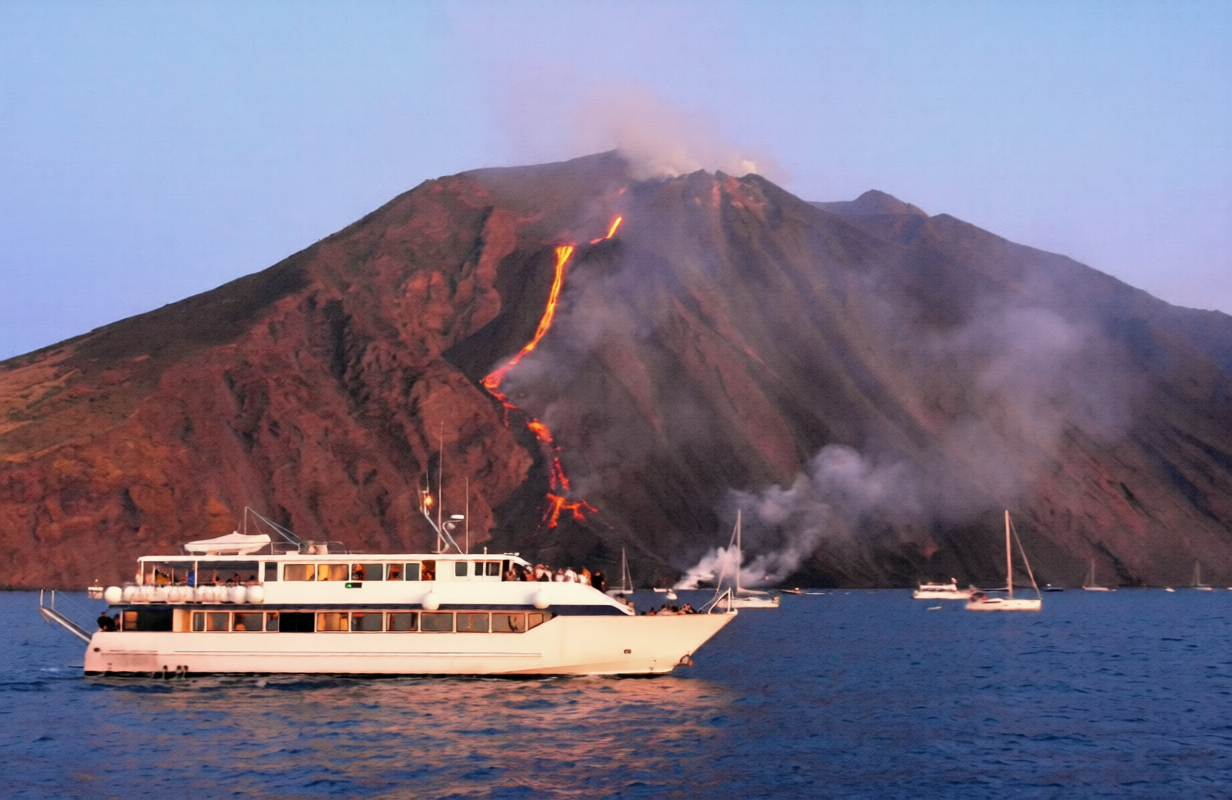
From a boat, this transforms the experience into something much more immersive, where the movement of the sea and the activity of the volcano combine.
Is Stromboli good for sailing? Yes, but with some important considerations. The island offers very few protected anchorages, and exposure to wind and swell can affect comfort, especially for overnight stays. For this reason, Stromboli is often better approached as a stop within a planned itinerary rather than as a base.
In practical terms, this makes it more suitable for experienced sailors or for skippered charters, where routing and timing can be adjusted to conditions.
Stromboli is rarely the easiest island to sail, but it is often the most memorable. When included in a wider route through the Aeolian Islands, alongside Panarea, Salina, or Lipari, it becomes a key highlight rather than just another stop.
Eating in Stromboli and Experiencing Daily Island Life
Food in Stromboli reflects the character of the island: simple, direct, and closely tied to what is available locally. There is no elaborate culinary scene or fine dining culture, but rather a focus on fresh ingredients, informal settings, and meals shaped by seasonality.
Restaurants are mainly concentrated in San Vincenzo and along the waterfront. Menus are often flexible, changing depending on the catch of the day or what is available. Fish is central, usually grilled or prepared with minimal seasoning, while local products such as capers, vegetables, and olive oil appear frequently in simple dishes.
What matters here is not complexity, but context. Meals are often experienced outdoors, on terraces or near the sea, where light, temperature, and surroundings become part of the moment. A dinner at sunset or a relaxed lunch after a swim tends to feel more significant than the dish itself.
Local life follows a similar rhythm. The day is shaped by heat and light, with slower mornings, quieter afternoons, and evenings that naturally move outdoors. Small squares, terraces, and waterfront areas become meeting points, while the presence of the volcano remains constant in the background.
For visitors, this often leads to a different way of experiencing the island. Stromboli is not a destination built around specific restaurants or curated food experiences. Instead, it is a place where everyday moments, walking through the village, stopping for a simple meal, watching the volcano at night, become the core of the journey.
How to Reach Stromboli: Access, Routes and Practical Tips
Stromboli can only be reached by sea. There is no airport, and this limitation is one of the reasons why the island has remained relatively untouched. Access is typically via hydrofoil or ferry from the northern coast of Sicily, mainly from Milazzo, or from other islands within the Aeolian archipelago.
Hydrofoils are the fastest option and run regularly during the main season, connecting Stromboli with Lipari, Salina, Panarea, and mainland Sicily. Ferries are slower but can carry vehicles and goods, which are essential for local life on the island.
Most arrivals take place on the northeastern side, between Scari and San Vincenzo, which is the main access point and where most services and accommodations are located.
From here, visitors can move on foot or by small local transport, as distances are limited and the island is not designed for heavy traffic.
Reaching Ginostra, on the opposite side, is more complex. There is no direct land connection, and access is mainly by sea. This makes it less practical but also more isolated, reinforcing its appeal for those looking for a quieter experience.
For many travelers, however, the most complete way to reach and experience Stromboli is by boat. Arriving from the water allows you to see the island’s full profile before landing and to explore parts of the coastline that are not accessible from land.
This is why Stromboli is often included within a broader sailing itinerary in the Aeolian Islands. The approach itself becomes part of the journey, not just a transfer, but a gradual introduction to the island’s landscape and character.
What to Do in Stromboli: Key Experiences on the Island
Stromboli does not offer a wide range of activities in the traditional sense, but what it offers is highly distinctive and closely connected to its landscape. The experience here is not about filling the day, but about engaging with a few key elements, the volcano, the sea, and the villages, in a slower and more immersive way:
Watching the Eruptions: Observing the volcano is the defining experience. Stromboli’s activity is frequent enough to be visible throughout the day, but the most striking moments occur at sunset and after dark. From land, several viewpoints allow you to see the upper part of the volcano, while from the sea, especially along the Sciara del Fuoco, the perspective becomes more direct and expansive. The contrast between darkness and the bursts of light from eruptions creates a unique atmosphere that changes continuously, making each observation slightly different from the previous one.
Hiking the Volcano: Climbing the volcano is one of the most requested activities, but it requires planning and awareness of current conditions. Access is regulated and may change depending on volcanic activity. In most cases, guided hikes are required. The experience is usually organized in the late afternoon, allowing visitors to reach designated viewpoints at sunset and remain there as darkness falls. This timing enhances visibility and adds a stronger visual impact to the activity.
Exploring the Villages: San Vincenzo is the main village and the primary point of arrival. It offers a mix of small shops, restaurants, and access to the sea, all within a compact and walkable area. The architecture is consistent, with white houses and simple structures adapted to the environment. Ginostra, located on the opposite side, offers a very different experience. More isolated and accessible mainly by boat, it is quieter and less developed. Visiting Ginostra provides a deeper sense of the island’s more remote character.
Swimming and Black Sand Beaches: Beaches in Stromboli are shaped by volcanic activity. Ficogrande is the most accessible and frequently visited, with black sand and clear, deep water. The coastline drops quickly, making swimming conditions different from sandy, shallow Mediterranean beaches. Smaller coves and less accessible areas can be explored by boat, offering quieter alternatives away from the main village.
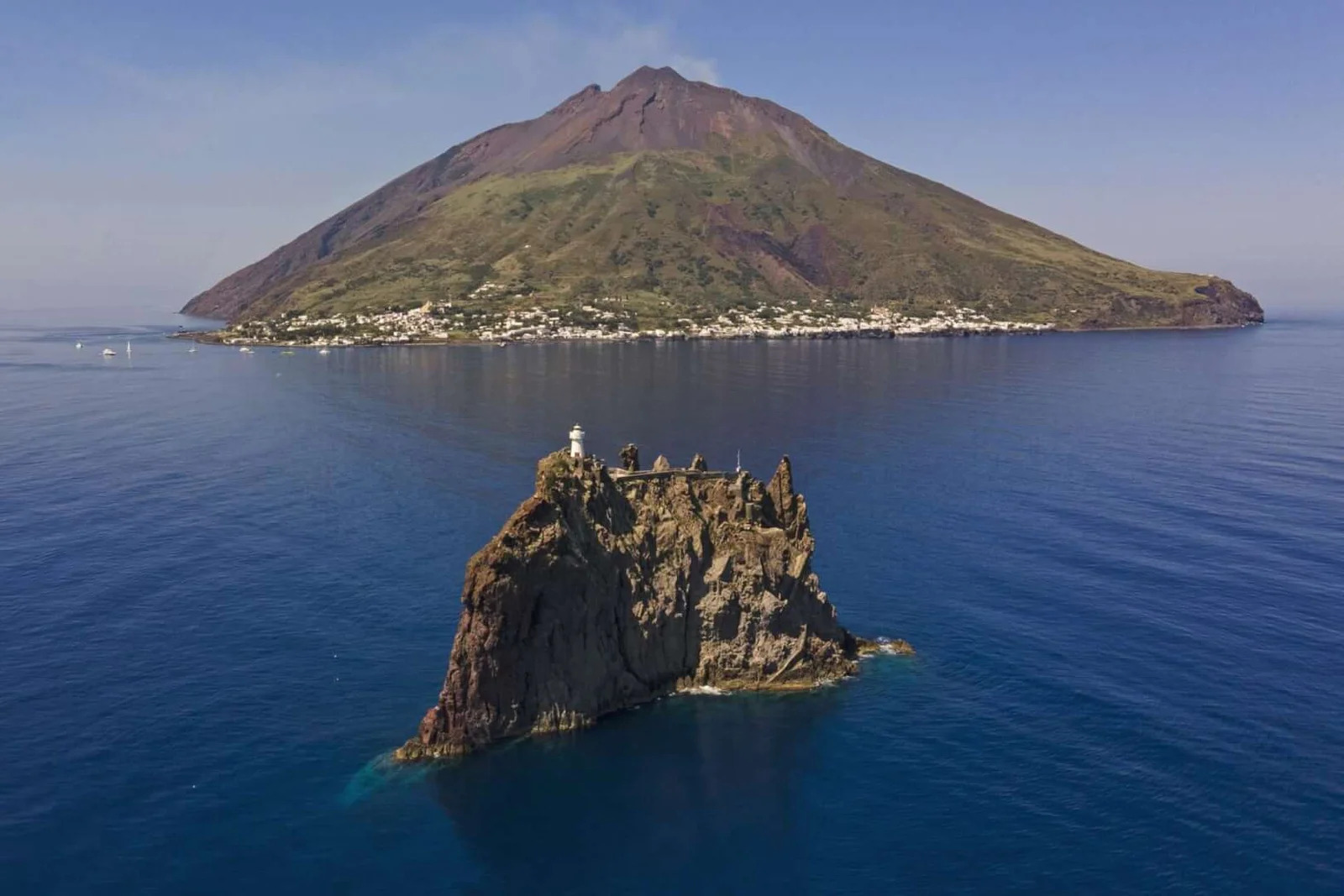
Strombolicchio and the Northern Coast: Strombolicchio, the steep rock formation located off the northeast coast, is one of the most recognizable landmarks of the island. While access is limited due to its protected status, it remains a key visual element, especially when approached from the sea. The surrounding coastline, particularly the northern side, offers some of the most dramatic views of the island’s volcanic structure.
When to Visit Stromboli: Seasons, Conditions and Travel Tips
The best time to visit Stromboli depends on the type of experience you are looking for, as the island changes significantly with the seasons. Weather, sea conditions, and visitor flow all influence how the island is experienced, especially given its small size and limited infrastructure.
May to June: Late spring is one of the most balanced periods to visit Stromboli. The island is less crowded, temperatures are comfortable, and visibility is often clear, making it ideal for both hiking and observing the volcano. Sea conditions are generally favorable for sailing, and the overall atmosphere remains more relaxed compared to peak summer. This period is particularly suited for travelers looking for a quieter and more immersive experience.
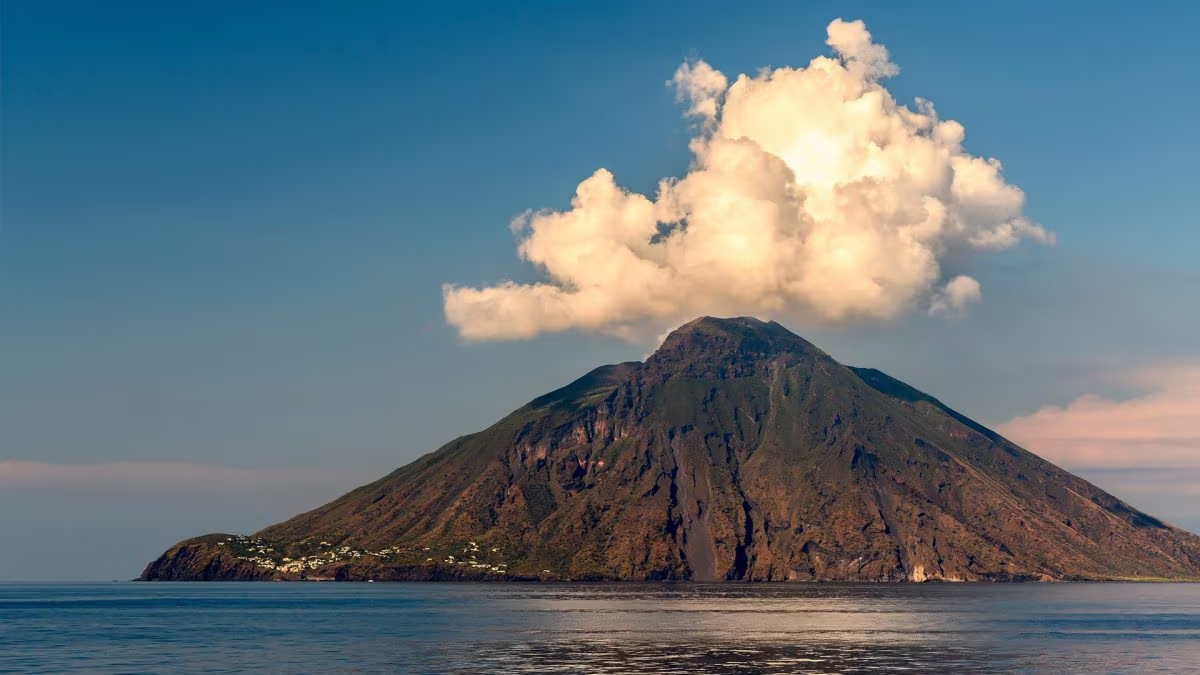
July to August: This is the peak season, when Stromboli becomes more active in terms of tourism. Transport connections are more frequent, restaurants and services are fully operational, and the sea is at its warmest. However, the island’s limited size means that crowds are more noticeable, especially in San Vincenzo and along the main beaches. The atmosphere is livelier, but also more intense. For those who enjoy a more social and energetic environment, this can still be a good time to visit.
September: September is often considered the best overall compromise. The sea remains warm after the summer, but the number of visitors begins to decrease. This creates a more balanced experience, with easier access to accommodations and a quieter atmosphere. Conditions for sailing are still generally good, and the visibility of eruptions at night remains one of the highlights of the season.
Winter: Winter offers a completely different perspective on Stromboli. The island becomes very quiet, with fewer visitors and reduced transport connections. Weather conditions can be more variable, and some services may be limited or closed. While this season may appeal to those looking for isolation, it is less practical for most travelers, especially for a first visit.
Stromboli at Its Core: Events, Atmosphere and What Defines the Island
One of the most interesting moments to experience Stromboli is during the Festa del Fuoco, usually held between late August and mid-September. Unlike traditional festivals, this event is closely tied to the identity of the island itself.
The theme revolves around fire, not only as a natural element but as a cultural expression. Performances often include dance, theatre, and visual arts, all inspired by movement, light, and transformation. What makes the event distinctive is its setting. The presence of an active volcano in the background creates a natural connection between the performances and the landscape, blurring the line between what is staged and what is real.
Despite attracting international artists and visitors, the scale remains relatively small. This preserves the intimate atmosphere of the island, avoiding the feeling of a large, detached event. Instead, the festival integrates naturally into the rhythm of Stromboli, becoming an extension of it rather than something separate.
This reflects a broader aspect of the island. Stromboli is not a destination that tries to offer a wide range of attractions or structured experiences. Its strength lies in its clarity and consistency.
Everything here revolves around a single dominant element, the volcano. The sea, the villages, and daily life all exist in relation to it. Even events like the Festa del Fuoco do not introduce something new, but rather reinterpret what is already present.
For travelers, this creates a different kind of experience. Stromboli is not about doing many things, but about experiencing a place where everything feels connected. It is often not the most comfortable or the most varied stop in the Aeolian Islands, but it is frequently the one that leaves the strongest impression.
Frequently Asked Questions
Q: What is a Cabin Charter?
A: A cabin charter allows you to book a cabin on a shared boat, perfect for solo travelers or small groups. Learn more here.
Q: What types of cabin charters are available?
A: Options include gulets, catamarans, and sailing yachts, each offering unique experiences. Explore options here.
Q: Is sailing experience required to join a cabin charter?
A: No, a professional crew handles everything, so you can relax and enjoy the journey. Read more here.
Q: Are itineraries fixed or flexible on a cabin charter?
A: Itineraries are thoughtfully planned but can be adjusted based on weather and guest preferences. Find out more here.
Q: What to pack for a yacht charter?
A: Pack light with soft luggage, swimsuits, sunscreen, and comfortable shoes. See the full packing guide here.
Q: What to do in case of adverse weather conditions?
A: The skipper will adjust the itinerary to ensure safety and comfort. Learn more here.
Q: Are Cabin Charters Suitable for Families with Children?
A: Absolutely! Cabin charters are perfect for families, offering kid-friendly amenities, safe environments, and flexible itineraries for quality time together. Learn more here.
Intersailclub team can help you find the perfect boat for your holiday, tailored to your budget.
Contact us for a free quotation and let's make waves together!


