

Polynesia
Polynesia, Sailing Across a Blue Continent
Seen from the sea, Polynesia is not a single destination but a vast oceanic region scattered with islands across the central and southern Pacific. Sailing here is defined less by coastline and more by distance, reef systems, and the relationship between open ocean and lagoon shelter.
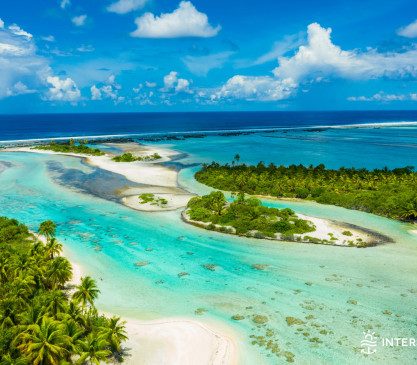
Polynesia stretches from high volcanic islands such as Tahiti to low coral atolls like those of the Tuamotu chain. Some islands rise sharply with mountainous interiors and dense vegetation, while others sit barely above sea level, encircled by reef barriers that protect luminous lagoons.
From the water, the contrast is immediate. Outside the reef, the Pacific is deep and powerful. Inside, lagoons are calm, shallow, and intensely turquoise. Sailing in Polynesia unfolds within this dual system, alternating between ocean passages and protected coral environments.
Why choose Polynesia for sailing?
Because it offers scale and purity. The horizon feels uninterrupted, distances feel real, and navigation reconnects with the fundamentals of wind, tide, and reef awareness.


Sailing Polynesia, Lagoons, Passes, and Open Ocean
Sailing in Polynesia depends heavily on island type. Volcanic islands allow coastal cruising and anchorages along defined shores. Coral atolls require precise entry through reef passes at appropriate tidal windows.
In areas such as Bora Bora, navigation often takes place entirely within a lagoon. Shallow sandy bottoms provide clear anchoring, and short legs connect motus, small coral islets scattered along the reef rim.
Around Tahiti and neighboring islands, passages between islands introduce moderate open-water crossings, generally supported by stable trade winds. These legs are longer than Mediterranean routes but predictable during the dry season.
In coral atolls, reef passes act as gateways. Timing is essential to align with slack or incoming tide. Once inside, the lagoon becomes a protected sailing ground with exceptional water clarity and minimal swell.
Is Polynesia suitable for beginners?
Lagoon cruising in well-charted areas can be accessible, but reef navigation requires preparation and local knowledge. Skippered charters are common, especially for those unfamiliar with Pacific tidal systems. IntersailClub typically structures Polynesian itineraries around reef-safe anchorages and stable wind periods.
Here, sailing is guided by coral geography and tidal rhythm.


Polynesian Navigation and Cultural Continuity
Polynesian culture is inseparable from ocean navigation. Long before European exploration, Polynesian voyagers crossed thousands of nautical miles using stars, swell patterns, and bird migration routes. The ocean was not a barrier but a connective space.
Traditional outrigger canoes remain symbols of this heritage. Coastal villages align with lagoon access, and fishing continues to shape daily life across many islands.
What defines Polynesia’s identity today?
Continuity between land, lagoon, and open sea. While modern infrastructure exists in larger islands, many communities remain proportionate and ocean-oriented.
Sailing through Polynesia reinforces this heritage. Reef passes navigated today follow the same natural corridors used for centuries. The Pacific remains the primary reference point.
Polynesia does not compress into a single coastline. It unfolds across water.
Climate and Sailing Conditions in Polynesia
June is the hottest month in Havana with an average temperature of 27°C (81°F) and the coldest is January at 21°C (70°F) with the most daily sunshine hours at 11 in July. The wettest month is June with an average of 80mm of rain. The best month to swim in the sea is in August when the average sea temperature is 30°C (86°F).
Check all Statistics in Accuweather


