
Favignana
Favignana, The Bright Heart of the Aegadian Islands
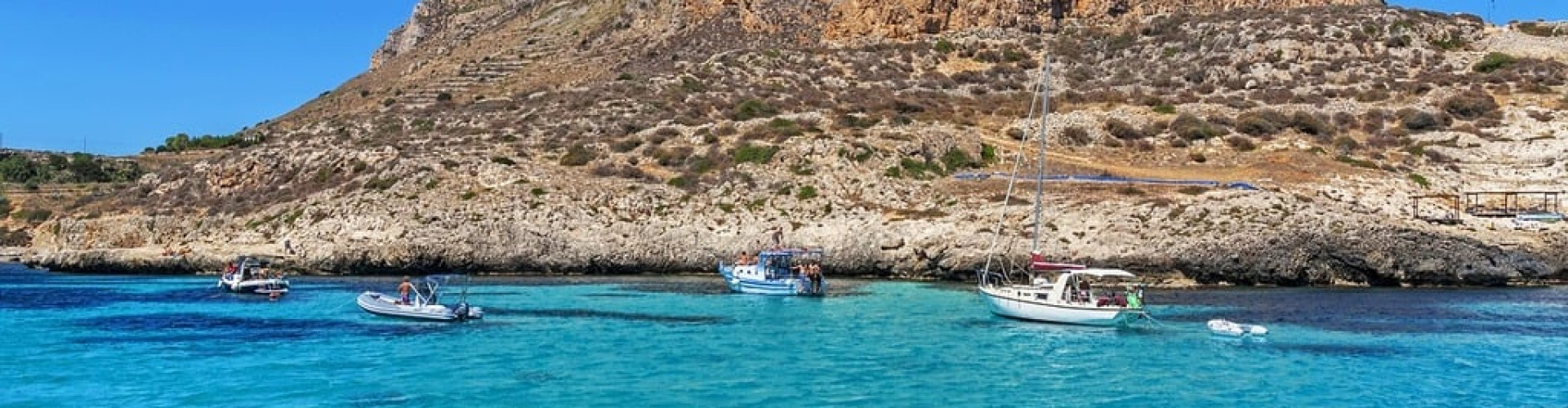
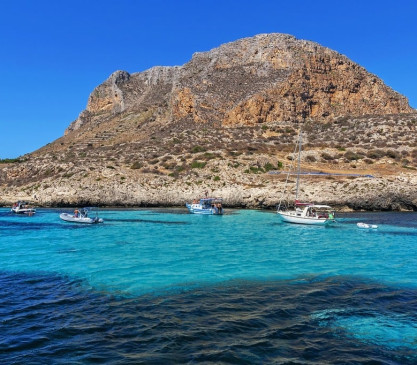
Seen from the sea, Favignana appears open and geometric. Unlike mountainous Mediterranean islands, Favignana is relatively flat, with long, low profiles broken by pale limestone edges. Its shape has often been compared to a butterfly, but from the water what stands out most is the transparency of the sea and the sharp reflection of light on rock and sand.
Located just west of Trapani and part of the Aegadian Islands, Favignana is the largest and most accessible island of the group. Its position creates short crossings from mainland Sicily, while still retaining a clear sense of separation. The island’s coastline alternates between small sandy stretches and sculpted limestone coves, many reachable only by boat.
Favignana’s scale is manageable. It can be circumnavigated in a day under favorable conditions, yet its coastline contains enough variation to structure a full week of relaxed exploration. The absence of high relief gives the island a horizontal character, where sky and sea dominate the visual experience.
Why choose Favignana as a sailing destination?
Because it offers clarity. The island is compact, readable, and defined by water rather than infrastructure. Sailing here is less about covering distance and more about selecting the right cove at the right moment.


Sailing Favignana, Calas of Light and Shallow Water
Sailing around Favignana is structured around short legs and frequent stops. Distances between anchorages are minimal, allowing flexible routing and spontaneous adjustments based on wind direction.
The eastern and southeastern coasts host some of the island’s most well-known coves, including Cala Rossa and Cala Azzurra. These anchorages are characterized by shallow turquoise water over pale rock or sand, creating exceptional visibility. Holding is generally good in settled conditions, though careful positioning is required due to the marine protected area regulations.
The western side presents a slightly wilder character, with fewer sandy inlets and more exposed sections. Here the sea feels broader, particularly when mistral winds influence the area. Even so, alternative anchorages remain within short distance, allowing safe planning with updated forecasts.
Favignana’s main harbor provides a functional stop for supplies and shore access, but much of the sailing experience unfolds at anchor rather than in port. Catamarans and monohulls are equally suited to the island’s shallow and mixed seabeds, provided anchoring discipline is maintained.
Is Favignana suitable for beginners?
Yes, especially in stable summer conditions. Short distances and clear navigation make it accessible, though exposure to prevailing winds requires awareness. IntersailClub typically integrates Favignana into compact itineraries, often combining it with Levanzo or Marettimo to balance shelter and exposure.
Here, sailing is intimate rather than expansive.


Tuna Fisheries and Maritime Identity
Favignana’s cultural identity is closely tied to the sea, particularly through its historic tuna fisheries known as tonnare. During the 19th century, the Florio family transformed the island into one of the Mediterranean’s most important tuna processing centers. The former Tonnara Florio complex still stands near the harbor, a reminder of the island’s working maritime past.
Unlike destinations built primarily for tourism, Favignana developed around fishing routes and seasonal marine cycles. The harbor remains active, and local cuisine continues to reflect tuna and seafood traditions deeply embedded in community life.
What defines Favignana today?
Proportion. The island remains small enough for daily life to retain scale, even during high season. Tourism increases activity in summer, but the underlying rhythm remains connected to fishing, weather, and marine protection.
Approaching Favignana by sea clarifies its structure. Villages align with sheltered shores, and anchorages follow natural protection rather than artificial design.
Favignana does not perform for visitors. It maintains continuity.
Climate and Sailing Conditions Around Favignana
June is the hottest month in Havana with an average temperature of 27°C (81°F) and the coldest is January at 21°C (70°F) with the most daily sunshine hours at 11 in July. The wettest month is June with an average of 80mm of rain. The best month to swim in the sea is in August when the average sea temperature is 30°C (86°F).
Check all Statistics in AccuweatherAll destinations in Mediterranean Sea
-

-
-
-
-
-
-
-
-
-
-
-
-
-
-
-
-
-
-
-
-
-
-
-
-
-
-
-
-
-
-


