
Formentera
Formentera, The Quiet Side of the Balearics
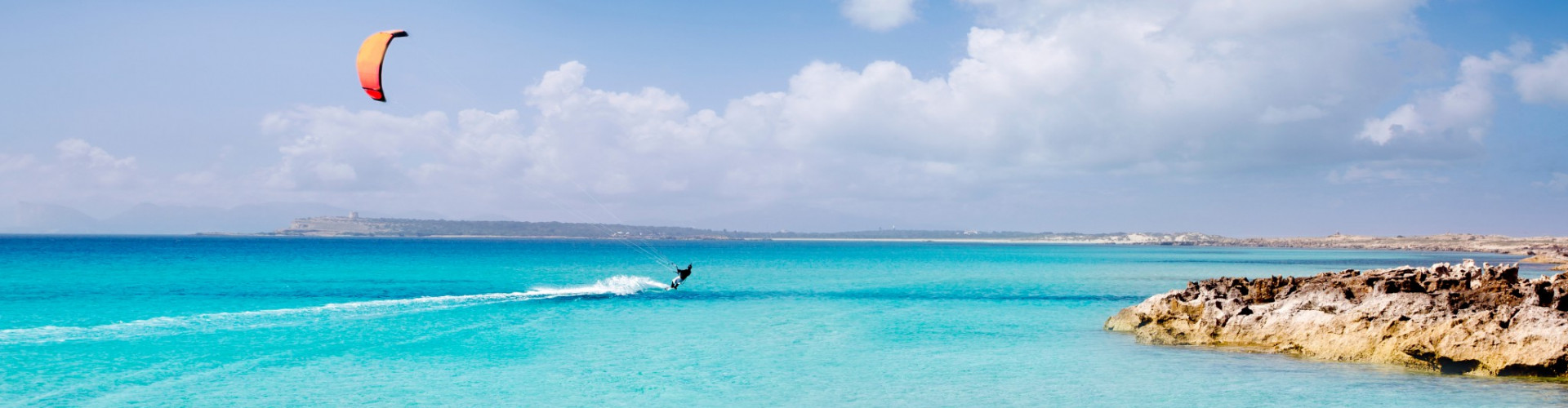
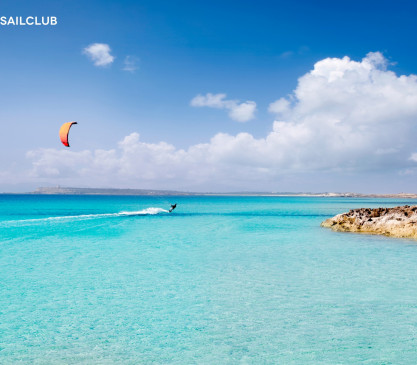
Seen from the sea, Formentera appears almost weightless. The island sits low on the water, with long pale beaches, shallow turquoise shelves, and few visual interruptions. Unlike its larger neighbor Ibiza, Formentera reveals itself slowly, defined less by landmarks than by color, clarity, and silence. The approach is gentle, with no high-rise skyline or dramatic cliffs announcing arrival, only a gradual shift from deep blue to luminous aquamarine.
Formentera lies at the southern edge of the Balearic archipelago, separated from Ibiza by a narrow channel that has long acted as both a link and a filter. This short distance has allowed the island to remain deliberately understated. With no airport and limited ferry access, Formentera developed at a different pace, preserving rural landscapes, traditional fishing grounds, and wide stretches of protected coastline. Salt pans near Estany Pudent and Estany des Peix still shape the interior, while juniper-lined paths connect small settlements scattered across the island.
Life here is closely tied to natural cycles. Posidonia oceanica meadows, a protected seagrass ecosystem recognized by UNESCO, surround much of the island and are largely responsible for the extraordinary water clarity. Beaches such as Ses Illetes and Migjorn are not defined by infrastructure but by exposure, wind, and light, changing character throughout the day. Inland, La Mola rises gently to the island’s highest point, offering views that stretch across open water rather than over dense development.
Why visit Formentera instead of other Balearic islands?
Because it offers restraint. The island rewards travelers who value space, simplicity, and slow movement over nightlife or spectacle. Its appeal is not concentrated in a single attraction but spread across subtle details: the color of sand at noon, the silence of anchorages at night, and the absence of urgency. Formentera is not an island that demands attention. It invites it quietly.


Sailing Formentera, Short Distances and Shallow Horizons
Sailing around Formentera is an exercise in proximity. Distances are short, coastlines are readable, and navigation unfolds at a relaxed pace, making the island ideal for slow exploration rather than long passages. The island’s shape encourages circular routes, with anchorages rarely more than a few miles apart.
The western side, facing Ibiza, is sheltered and shallow. Areas around Espalmador and Ses Illetes are characterized by sandy bottoms and clear holding, popular for daytime stops and overnight anchoring in settled conditions. The seabed here is fragile due to Posidonia meadows, so anchoring is restricted to designated sandy patches, an important consideration for route planning. The reward is exceptional water clarity and calm swimming conditions, particularly suitable for catamarans and small cruising sailboats.
Sailing south and east, the coastline becomes more open. Cala Saona offers a natural indentation with good protection from northerly winds, while the eastern side near La Mola is more exposed, with deeper water and fewer anchorages. This contrast allows itineraries to adapt easily to wind direction, shifting between sheltered lagoons and open Mediterranean stretches without long detours.
Is Formentera good for sailing?
Yes, especially for those who value short hops, visual navigation, and frequent stops. Winds are typically moderate during the main season, and the absence of heavy commercial traffic adds to the sense of ease. Skippered cruises and small bareboat itineraries are common, often combined with brief crossings to Ibiza for variety. IntersailClub generally approaches Formentera as a destination where timing, anchoring discipline, and local knowledge matter more than distance covered.
Sailing here is not about covering miles. It is about staying close to shore, adjusting plans to light and wind, and letting the island’s scale define the rhythm of the journey.


A Minimalist Culture Shaped by Sea and Scarcity
Formentera’s cultural identity is built on limitations. With scarce freshwater, thin soil, and exposure to winds, the island historically demanded adaptability rather than expansion. Fishing, salt harvesting, and small-scale agriculture formed the backbone of local life, reinforced by isolation that lasted well into the 20th century.
Unlike Ibiza, Formentera never developed a large urban center. Villages such as Sant Francesc Xavier and El Pilar de la Mola remained small, organized around churches, markets, and seasonal rhythms. The sea played a central role not as a backdrop but as a provider, with traditional fishing techniques and boat maintenance shaping daily routines. Even today, small fishing boats still line certain coves, signaling continuity rather than revival.
Cultural influences arrived gradually. In the 1960s and 1970s, artists and countercultural travelers were drawn to the island’s simplicity, leaving a subtle legacy of craftsmanship, music, and informal gatherings rather than permanent transformation. The famous La Mola artisan market reflects this history, blending local products with handmade objects inspired by the island’s environment.
What cultural influences shape Formentera’s identity?
Simplicity, preservation, and restraint. There is little emphasis on spectacle or performance. Instead, culture appears in food based on local fish and produce, in low-profile festivals tied to village life, and in an ongoing respect for natural limits. Sailing reinforces this perspective, revealing how closely culture follows geography.
Formentera’s identity is not built to impress quickly. It unfolds slowly, in parallel with the sea that has always set the island’s boundaries.
Climate and Sailing Conditions Around Formentera
June is the hottest month in Havana with an average temperature of 27°C (81°F) and the coldest is January at 21°C (70°F) with the most daily sunshine hours at 11 in July. The wettest month is June with an average of 80mm of rain. The best month to swim in the sea is in August when the average sea temperature is 30°C (86°F).
Check all Statistics in AccuweatherDec
Jan
Feb
Mar
Apr
May
Jun
Jul
Aug
Sep
Oct
Nov
All destinations in Mediterranean Sea
-

-
-
-
-
-
-
-
-
-
-
-
-
-
-
-
-
-
-
-
-
-
-
-
-
-
-
-
-
-
-


