
Mallorca
Mallorca, A Complete Mediterranean Sailing World
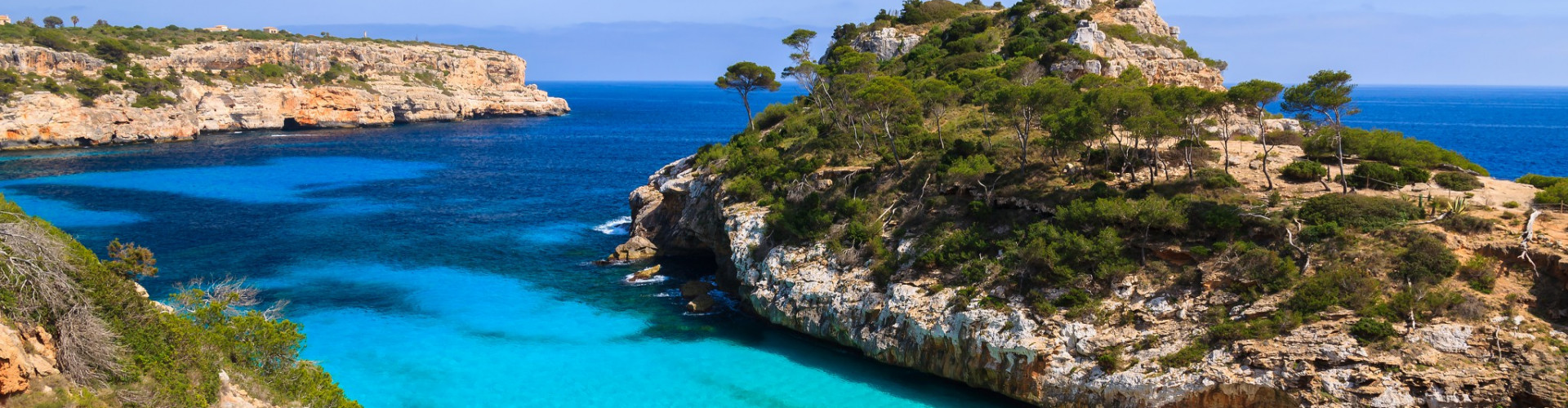
Seen from the water, Mallorca reveals a rare balance. The island is large enough to feel substantial, yet compact enough to be explored by sail within a single week. High limestone mountains rise directly from the sea, long beaches alternate with rocky headlands, and deep calas open unexpectedly along the coast. Mallorca feels structured, varied, and coherent all at once.
Located at the heart of the Balearic archipelago, Mallorca has always acted as a crossroads rather than a retreat. Its size allowed the development of inland regions, agriculture, and cities, while its coastline remained deeply maritime. The result is an island where the sea never feels secondary. From any approach, ports, coves, and anchorages appear as functional entry points rather than decorative settings.
Unlike destinations defined by a single iconic coastline, Mallorca offers multiple sailing environments. The dramatic northwestern coast beneath the Serra de Tramuntana contrasts sharply with the calmer eastern shores, where sandy bays and sheltered calas dominate. This internal diversity makes Mallorca less about a fixed route and more about adapting the itinerary to wind, season, and preference.
Why choose Mallorca for sailing?
Because it offers completeness. It combines scale, protection, variety, and infrastructure without losing a sense of geography. Mallorca does not rely on a single highlight. It works as a system.


Sailing Mallorca, Calas, Cliffs, and Short Regional Transitions
Sailing around Mallorca is defined by variety over short distances. Conditions, scenery, and anchorages can change significantly within a few miles, allowing itineraries to evolve day by day without long passages.
The northwestern coast, running beneath the Serra de Tramuntana, is Mallorca’s most dramatic sailing area. Steep cliffs plunge into deep water, with limited but striking anchorages near places like Cala Deià and Port de Sóller. This coast is more exposed and best explored in settled conditions, rewarding sailors with some of the most impressive scenery in the western Mediterranean.
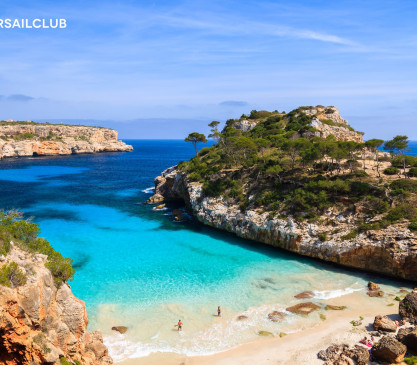
The eastern coast follows a different rhythm. Here, the shoreline softens into a sequence of calas with sandy bottoms, clear water, and reliable holding. Daily distances are short, and routes feel relaxed, well suited to swimming stops and easy anchoring. Southern Mallorca combines long beaches with larger ports, offering flexibility between quiet bays and full marina services.
Is Mallorca suitable for all sailing levels?
Yes. Beginners benefit from clear navigation, good charts, and abundant infrastructure, while experienced sailors can explore exposed sections, plan longer legs, or sail year round. Catamarans and monohulls are equally common, and itineraries can be easily adjusted based on weather and experience. IntersailClub typically treats Mallorca as a destination that adapts naturally to different sailing styles rather than forcing a fixed route.
Mallorca does not require compromise. It allows comfort and challenge to coexist within the same coastline.


Layers of Culture Between Coast and Interior
Mallorca’s cultural identity is shaped by both land and sea. Unlike smaller islands, Mallorca developed a strong inland economy alongside its maritime life. Roman, Arab, and Catalan influences shaped irrigation systems, towns, and agriculture, while coastal settlements remained tied to fishing, trade, and defense.
Ports and coastal towns evolved as functional gateways rather than resort centers. Watchtowers still line the coast, reminders of centuries of maritime surveillance. Inland villages reflect a slower rhythm, focused on agriculture, craft, and seasonal cycles, creating a contrast that remains visible today.
What cultural influences define Mallorca?
Continuity and integration. Rather than replacing one identity with another, Mallorca layered influences over time. Cuisine reflects this blend, combining seafood with inland produce, olive oil, and wine. Festivals often connect these worlds, beginning inland and ending at the coast or vice versa.
Sailing highlights this structure clearly. Approaching Mallorca by sea reveals how towns are oriented toward access, protection, and trade, while the interior remains deliberately separate. The island’s identity unfolds through movement rather than spectacle.
Mallorca’s culture is not concentrated in one place. It is distributed, balanced, and deeply geographic.
Climate and Sailing Conditions Around Mallorca
June is the hottest month in Havana with an average temperature of 27°C (81°F) and the coldest is January at 21°C (70°F) with the most daily sunshine hours at 11 in July. The wettest month is June with an average of 80mm of rain. The best month to swim in the sea is in August when the average sea temperature is 30°C (86°F).
Check all Statistics in AccuweatherAll destinations in Mediterranean Sea
-

-
-
-
-
-
-
-
-
-
-
-
-
-
-
-
-
-
-
-
-
-
-
-
-
-
-
-
-
-
-


