
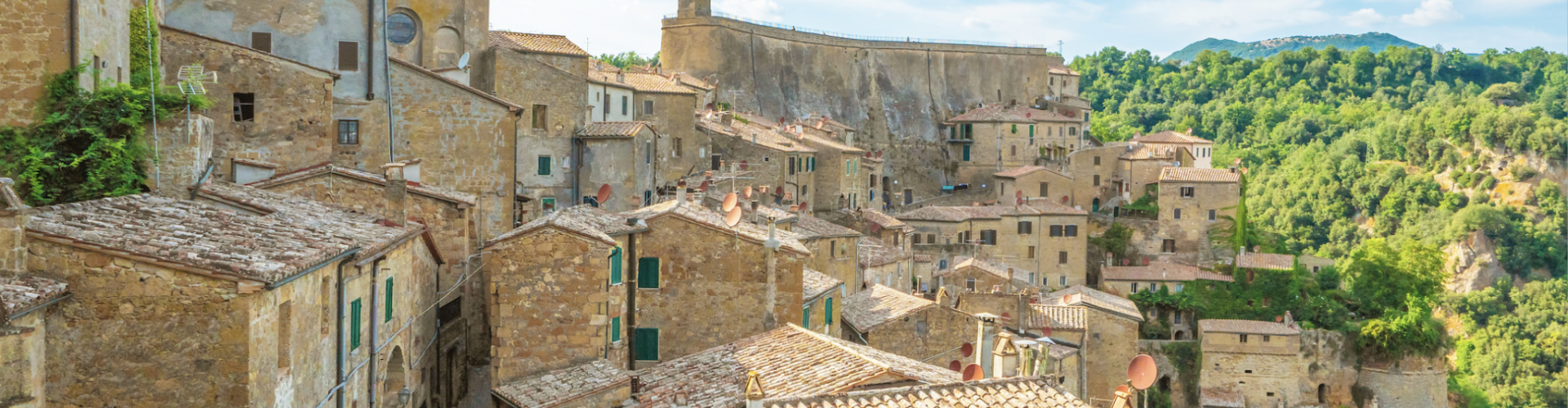
Tuscany
Tuscany, Sailing Between Islands and Etruscan Shores
Seen from the sea, Tuscany does not present a continuous dramatic coastline. Instead, it unfolds gradually, alternating low sandy stretches with rocky promontories and offshore islands that structure navigation. The Tuscan coast faces the Tyrrhenian Sea and includes the Tuscan Archipelago, a compact island system that defines much of the region’s sailing character.
Unlike more concentrated archipelagos, Tuscany combines mainland passages with island crossings. The Elba is the largest and most central island, while Capraia, Giglio, and others extend the sailing ground westward into open water. On the mainland, the Monte Argentario peninsula forms a natural maritime focal point with sheltered harbors and elevated profiles visible from afar.
Tuscany’s coastal landscape is defined less by vertical cliffs and more by rhythm. Headlands, bays, and islands create a navigable sequence that feels structured and readable. The visual balance between cultivated inland hills and maritime exposure gives the region a distinctive Mediterranean tone.
Why sail Tuscany?
Because it offers variety without fragmentation. Island routes and coastal passages integrate naturally, allowing itineraries to move between protected anchorages and open-sea crossings within moderate distances.


Sailing Tuscany, Archipelago Routes and Coastal Transitions
Sailing in Tuscany follows two main patterns. One focuses on the Tuscan Archipelago, the other combines island stops with mainland coasting.
Elba often serves as the primary base. Its indented coastline offers multiple anchorages, sandy bays, and historic ports such as Portoferraio. The island’s size allows for multi-day exploration without repetition, and its varied exposure enables route adjustments depending on wind direction.
From Elba, short crossings lead toward Capraia, which feels more remote and volcanic in character. The passage introduces a greater sense of open sea while remaining manageable in settled conditions. To the south, Giglio and the Argentario peninsula provide additional sheltered options.
Mainland sailing along the Tuscan coast presents longer sandy stretches interrupted by structured ports. Distances between harbors are moderate, making route planning straightforward even for less experienced crews.
Is Tuscany suitable for beginners?
Yes, especially within the archipelago in stable weather. Distances are reasonable, navigation is clear, and alternatives are generally within reach. Experienced sailors can extend routes toward Capraia or plan longer passages along exposed stretches. IntersailClub typically treats Tuscany as a balanced sailing region, adaptable to both relaxed and progressive itineraries.
Here, sailing feels composed rather than extreme.


Etruscan Roots and Maritime Continuity
Tuscany’s coastal identity is rooted in ancient maritime civilizations. The Etruscans established early trading ports along this coast, leveraging natural harbors for exchange across the Mediterranean. Later Roman influence reinforced these maritime routes, shaping settlement patterns that remain visible today.
Ports such as Portoferraio and coastal towns near Monte Argentario reflect centuries of naval and commercial presence. Fortifications overlooking harbors testify to the strategic importance of these shores.
Fishing traditions continue alongside recreational boating. Local cuisine integrates seafood with inland agricultural products, reinforcing Tuscany’s dual identity as both maritime and rural.
What defines Tuscany’s coastal culture?
Integration. Land and sea influence one another continuously, without either dominating the landscape.
Approaching Tuscany by water reveals how towns align with shelter and topography rather than spectacle. The coastline retains a measured scale.
Tuscany does not impose drama. It maintains proportion.
Climate and Sailing Conditions in Tuscany
June is the hottest month in Havana with an average temperature of 27°C (81°F) and the coldest is January at 21°C (70°F) with the most daily sunshine hours at 11 in July. The wettest month is June with an average of 80mm of rain. The best month to swim in the sea is in August when the average sea temperature is 30°C (86°F).
Check all Statistics in AccuweatherJan
Feb
Mar
Apr
May
Jun
Jul
Aug
Sep
Oct
Nov
Dec
All destinations in Mediterranean Sea
-

-
-
-
-
-
-
-
-
-
-
-
-
-
-
-
-
-
-
-
-
-
-
-
-
-
-
-
-
-
-


